
“You don’t win big matches without first learning how to win the small ones.” —Serena Williams
The Bahrain Open on the ITF Women’s World Tennis Tour returned to Manama in January with a field that reflected exactly what a W75 tournament is meant to deliver, proven professionals, rising contenders, and qualifiers determined to turn opportunity into momentum.
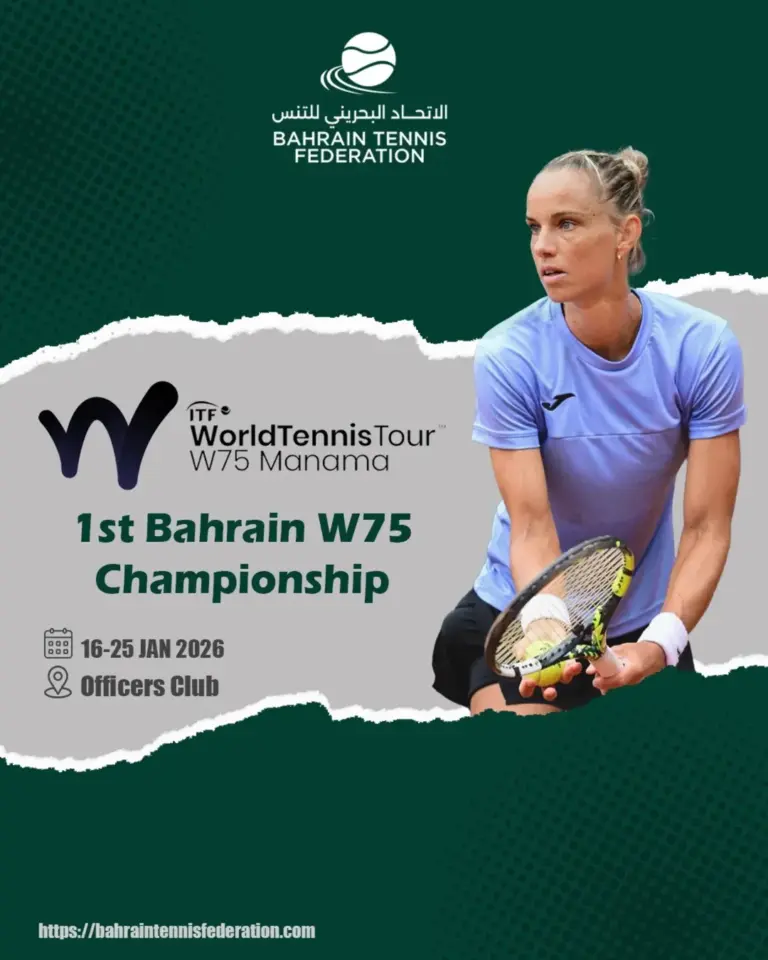
Held at the Public Security Officers Club from Jan. 19 to 25, the outdoor hard-court event offered $60,000 in prize money and valuable ranking points early in the 2026 season. As one of the more competitive W75 stops on the calendar, the Bahrain Open once again proved why it remains a meaningful platform for players navigating the transition between ITF success and higher-level tours.
Qualifying Sets the Competitive Tone
Qualifying matches on Jan. 18 immediately signaled the depth of the field. Ekaterina Ovcharenko emerged as one of the standout performers, advancing through qualifying before carrying that form into the main draw. Rina Saigo and Ankita Raina also showed early composure, navigating tightly contested matches that tested endurance and consistency.
As is often the case at this level, qualifiers brought confidence and urgency into the main draw, traits that would trouble higher-ranked opponents as the week progressed.
Main Draw Brings Experience and Momentum
The opening rounds featured a mix of control and unpredictability. Alina Korneeva, one of the most closely watched young talents in the draw, made a strong start with a composed opening-round victory, showcasing clean ball-striking and court awareness beyond her years.
Experienced campaigners such as Fiona Ferro, Hanne Vandewinkel, Sofia Costoulas, Carole Monnet, and Jessika Ponchet added balance to the field, blending tactical discipline with the patience required on Manama’s outdoor hard courts. Several matches extended into deciding sets, underlining the competitive parity typical of W75 events.
Ovcharenko’s progression from qualifying into the main draw became one of the tournament’s early storylines, reinforcing how momentum can outweigh rankings at this level of competition.
Photos from Bahrain Tennis Federation
Matches Defined by Margins and Crowd Engagement
The court conditions favored baseline consistency and smart shot selection, with service games becoming increasingly important as matches tightened. Players who managed recovery well between rounds often found themselves better positioned late in matches, a recurring theme as the tournament moved deeper into the week.
For spectators, the balance between experienced professionals and emerging players created compelling matchups, where tactical maturity met athletic ambition.
The Bahrain Open’s compact venue allowed fans close access to the action, creating an engaged atmosphere that rewarded extended rallies and momentum swings. Local support was particularly noticeable during comeback efforts, adding energy to matches that stretched into third sets.
The setting continued to highlight the tournament’s appeal as both a competitive sporting event and a lifestyle fixture on Bahrain’s winter calendar.
Why the Bahrain Open Is a Key Tournament on the ITF Women’s World Tennis Tour
W75 tournaments occupy a critical space on the ITF Women’s World Tennis Tour. They provide enough ranking incentive to alter a player’s season trajectory while maintaining competitive balance across the draw. For players like Korneeva, Ferro, and Ovcharenko, performances in Manama can influence confidence and scheduling decisions well beyond January.
As the Bahrain Open moved toward its latter stages, the field narrowed to those combining discipline, fitness, and adaptability. Whether through controlled aggression or patient point construction, players who adjusted best to conditions separated themselves from the pack.
Once again, the Bahrain Open delivered a familiar ITF promise: high-quality competition, emerging narratives, and a glimpse at the players shaping the future of women’s tennis.








Add a comment